.png)
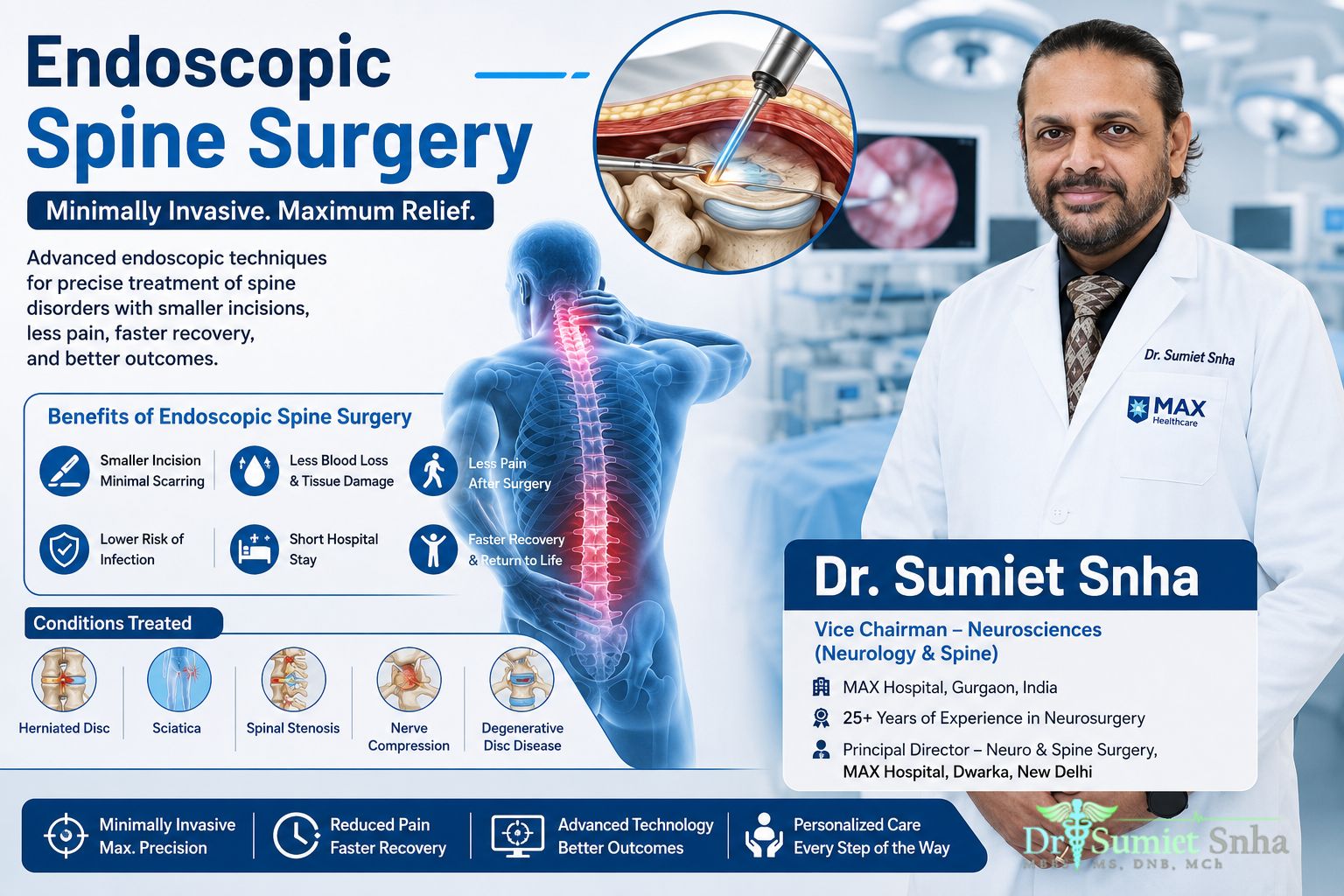
Endoscopic Spine Surgery Modern Treatment for Back and Neck Pain with Faster Recovery
Living with persistent back pain or neck pain can affect mobility, work, sleep, and overall quality of life. Modern spinal care has advanced significantly, making Endoscopic Spine Surgery an effective option for selected patients who require surgical treatment with minimal disruption to healthy tissues. If you are searching for the Best Spine Surgeon for Endoscopic Spine Surgery, understanding how this advanced technique works and who may benefit from it is an important first step. As a form of Minimally Invasive Spine Surgery, it uses a small camera and specialized instruments to treat specific spinal conditions through tiny incisions, helping reduce tissue damage and support a smoother recovery.
This comprehensive guide explains the fundamentals of Endoscopic Spine Surgery, the conditions it can treat, patient eligibility, surgical procedure, benefits, possible risks, recovery expectations, and when specialist consultation becomes important. It also highlights how ongoing advances in minimally invasive technology are improving surgical precision, patient comfort, and recovery outcomes, enabling many individuals with carefully selected spine disorders to return to their daily activities more quickly while receiving personalized, evidence-based spine care.
Understanding Endoscopic Spine Surgery
What Is Endoscopic Spine Surgery
Endoscopic Spine Surgery is an advanced form of Spine Surgery that uses a thin, high-definition endoscope equipped with a camera and specialized surgical instruments to access the affected area of the spine through a very small incision. Unlike conventional open surgery, which often requires a larger incision and greater muscle dissection, this minimally invasive approach is designed to preserve healthy tissues while providing a clear, magnified view of the surgical field. As a result, surgeons can accurately treat selected spinal conditions with less disruption to surrounding muscles, ligaments, and bones.
Benefits of Endoscopic Spine Surgery
The smaller incision and precise surgical technique may help reduce tissue trauma, postoperative discomfort, blood loss, and hospital stay while supporting an earlier return to everyday activities for appropriately selected patients. A qualified Spine Specialist determines whether Endoscopic Spine Surgery is suitable based on the patient's symptoms, imaging findings, overall spinal condition, and response to conservative treatment. Current medical evidence also suggests that, for selected cases, endoscopic techniques are associated with less postoperative pain and shorter hospital stays compared with many conventional open procedures, while maintaining effective clinical outcomes.
Conditions That Can Be Treated with Endoscopic Spine Surgery
Common Spine Disorders Treated
Modern Endoscopic Spine Surgery is used to manage several Spine Disorders that cause persistent pain, nerve irritation, or reduced mobility when conservative treatments are no longer effective. By using a minimally invasive approach, surgeons can accurately access the affected spinal structures while preserving surrounding healthy tissues. Depending on the diagnosis and clinical evaluation, this technique may be recommended for the following conditions:
- Herniated Disc requiring Herniated Disc Surgery after persistent symptoms or neurological deficits.
- Slip Disc causing continuous back pain or radiating leg pain.
- Sciatica resulting from compressed spinal nerves, where Sciatica Treatment may include endoscopic decompression.
- Spinal Stenosis leading to narrowing of the spinal canal and pressure on nerves.
- Nerve Compression causing numbness, tingling, muscle weakness, or pain in the arms or legs.
- Degenerative Disc Disease associated with age-related spinal wear and chronic discomfort.
- Selected cervical and lumbar spine disorders that can be treated safely using endoscopic techniques after careful patient selection.
The suitability of Endoscopic Spine Surgery depends on imaging findings, symptom severity, and evaluation by an experienced spine specialist.
Who Is a Good Candidate for Endoscopic Spine Surgery
Not every patient with Chronic Back Pain or Neck Pain requires surgery, but some individuals may benefit from Endoscopic Spine Surgery after a thorough medical evaluation. Suitable candidates are typically those with persistent back, leg, arm, or neck pain that continues to affect daily activities despite medication, physiotherapy, lifestyle modifications, or other conservative Spine Treatment options.
Key Factors That Determine Eligibility
MRI findings confirming nerve compression, a herniated disc, or selected spinal disorders help determine whether this minimally invasive procedure is appropriate. Good overall health, realistic recovery expectations, and the ability to participate in postoperative rehabilitation also contribute to successful outcomes. A comprehensive assessment by a spine specialist ensures that treatment is tailored to the patient's symptoms, imaging results, and individual healthcare needs rather than relying on a one-size-fits-all approach.
How Endoscopic Spine Surgery Is Performed
Step by Step Surgical Procedure
Every Spine Surgery begins with a detailed preoperative evaluation, including a physical examination, review of symptoms, and imaging studies such as MRI or CT scans to accurately identify the affected spinal level. Once the patient is prepared, anesthesia is administered to ensure comfort throughout the procedure. The surgeon then makes a small incision, usually less than one centimeter, and carefully inserts a high-definition endoscope equipped with specialized surgical instruments. This allows a clear, magnified view of the spinal structures while minimizing damage to surrounding muscles and soft tissues.
Precision Removal of Problematic Tissue
During procedures such as Endoscopic Discectomy, the compressed disc material or overgrown bone causing nerve irritation is precisely removed to relieve pressure. After confirming adequate decompression, the instruments are withdrawn, and the small incision is closed with minimal sutures or surgical adhesive. Following this Minimally Invasive Spine Surgery, patients are monitored in the recovery area, where pain control, neurological status, and early mobility are assessed before discharge planning begins.
Benefits of Endoscopic Spine Surgery
Modern Endoscopic Spine Surgery offers several advantages for appropriately selected patients by treating spinal conditions through a minimally invasive approach. Because the procedure is performed using specialized instruments and a small incision, it aims to preserve healthy tissues while promoting Faster Recovery After Spine Surgery. Although recovery varies depending on the individual and the underlying spinal condition, many patients experience improved comfort and a quicker return to routine activities. Some of the potential benefits include:
- Smaller surgical incision with minimal scarring
- Less blood loss during the procedure
- Reduced muscle and soft tissue damage
- Lower postoperative pain and discomfort
- Reduced risk of wound infection
- Shorter hospital stay in suitable cases
- Faster Recovery After Spine Surgery and early mobility
- Earlier return to work and normal daily activities
- Better cosmetic appearance because of smaller incisions
Following postoperative instructions, physiotherapy, and regular follow-up appointments remains essential for long-term Spine Care and achieving the best possible surgical outcome.
Risks and Possible Complications
Like any Spine Surgery, Endoscopic Spine Surgery carries certain risks, although serious complications are uncommon when the procedure is performed for the right patient. Potential risks include infection, bleeding, temporary or permanent nerve injury, persistent pain, or recurrence of a herniated disc that may require additional treatment. In rare cases, spinal fluid leakage or incomplete symptom relief can also occur. Careful patient selection, accurate diagnosis, modern surgical techniques, and treatment by an experienced Spine Specialist significantly reduce these risks. Patients should discuss the expected benefits, possible complications, and recovery process with their surgeon before making an informed treatment decision.
Common Risks and Their Management
|
Possible Risk |
How the Risk Is Reduced |
|
Infection |
Sterile surgical techniques and preventive antibiotics |
|
Bleeding |
Minimally invasive approach and careful surgical planning |
|
Nerve injury |
High-definition visualization and precise surgical instruments |
|
Persistent pain |
Accurate diagnosis, rehabilitation, and follow-up care |
|
Recurrence of disc herniation |
Appropriate patient selection and adherence to postoperative instructions |
|
Rare complications |
Comprehensive preoperative evaluation and experienced surgical expertise |
Recovery After Endoscopic Spine Surgery
Recovery after Endoscopic Spine Surgery is often quicker than traditional open procedures, although healing time varies depending on the patient's condition and the complexity of surgery. Many patients are encouraged to begin walking within a few hours or the next day under medical supervision, and some may be discharged after a short hospital stay.
Importance of Rehabilitation and Follow-Up
Pain management, guided physiotherapy, and regular home exercises play an important role in restoring strength, flexibility, and spinal function. Most individuals can gradually return to work and normal daily activities as advised by their surgeon. Scheduled follow-up visits help monitor healing, evaluate progress, and address any concerns. Maintaining good Spine Care, following rehabilitation instructions, and adopting healthy lifestyle habits contribute to Faster Recovery After Spine Surgery while helping reduce the recurrence of Chronic Back Pain and supporting long-term spinal health.
When Should You Consult the Best Spine Surgeon for Endoscopic Spine Surgery
You should seek medical evaluation if you experience persistent back pain, ongoing neck pain, leg or arm weakness, numbness, tingling, sciatica, difficulty walking, or loss of bladder or bowel control. These symptoms may indicate underlying spinal conditions that require timely diagnosis and appropriate treatment. Consulting the Best Spine Surgeon for Endoscopic Spine Surgery can help determine whether conservative treatment or Endoscopic Spine Surgery is the most suitable option based on your symptoms and imaging findings.
About Dr. (Prof.) Sumiet Snha
Professional Background
Dr. (Prof.) Sumiet Snha is Vice Chairman – Neurosciences (Neurology & Spine) and is currently associated with MAX Hospital, Gurgaon, India. He has more than 25+ years of experience in neurosurgery and currently serves as Principal Director – Neuro & Spine Surgery, MAX Hospital, Dwarka, New Delhi. His previous roles include Director – Neuro & Spine Surgery at Paras Health, Gurugram and Professor, Department of Neurosurgery, All India Institute of Medical Sciences (AIIMS), New Delhi.
Professional Affiliations and Expertise
Dr. Snha is the Secretary of the Neurotrauma Society of India, Founder Secretary of the Indian Society of Peripheral Nerve Surgery, and was the Founder Faculty In-charge of the Cadaver Training and Research Facility at AIIMS JPNA Trauma Centre. He also served on the core committee responsible for formulating national guidelines for traumatic brain injury. His clinical interests include minimally invasive spine surgery, complex peripheral nerve surgery, and advanced neuro-spinal procedures that aim to reduce tissue trauma, postoperative pain, and support faster patient recovery whenever clinically appropriate.
Frequently Asked Questions
1. What is Endoscopic Spine Surgery?
Endoscopic Spine Surgery is a minimally invasive procedure that uses a small camera and specialized instruments to treat selected spinal conditions through tiny incisions, reducing damage to surrounding tissues.
2. Who needs Endoscopic Spine Surgery?
It may be recommended for patients with persistent back or neck pain, herniated discs, sciatica, spinal stenosis, or nerve compression that does not improve with conservative treatment.
3. Is Endoscopic Spine Surgery Safe?
Yes. For appropriately selected patients, Endoscopic Spine Surgery is generally considered safe when performed by an experienced spine surgeon using modern surgical techniques.
4. How long does Endoscopic Spine Surgery take?
The procedure usually takes between one and three hours, depending on the spinal condition being treated and the complexity of the surgery.
5. What conditions can be treated with Endoscopic Spine Surgery?
It can be used to treat herniated discs, slip discs, sciatica, spinal stenosis, nerve compression, degenerative disc disease, and selected cervical and lumbar spine disorders.
6. What is the recovery time after Endoscopic Spine Surgery?
Many patients resume light daily activities within a few weeks, while complete recovery depends on the type of surgery, rehabilitation, and individual healing.
7. Is Endoscopic Spine Surgery painful?
The procedure is performed under anesthesia, and postoperative discomfort is often less than with traditional open surgery because of the smaller incision and reduced tissue disruption.
8. Can Endoscopic Spine Surgery treat sciatica?
Yes. If sciatica is caused by a herniated disc or nerve compression that has not responded to non-surgical treatment, endoscopic decompression may help relieve symptoms.
9. What are the risks of Endoscopic Spine Surgery?
Possible risks include infection, bleeding, nerve injury, persistent pain, recurrence of disc herniation, or other uncommon complications. Careful patient selection helps minimize these risks.
10. How successful is Endoscopic Spine Surgery?
Clinical studies have shown favorable outcomes in carefully selected patients. Success depends on the underlying spinal condition, surgical technique, and adherence to postoperative rehabilitation.
11. Can I return to work after Endoscopic Spine Surgery?
Many patients return to desk-based work within a few weeks, while physically demanding jobs may require a longer recovery period as advised by the treating surgeon.
12. When should I consult the Best Spine Surgeon for Endoscopic Spine Surgery?
You should seek specialist evaluation if you have persistent back or neck pain, progressive weakness, numbness, tingling, sciatica, difficulty walking, or bladder or bowel symptoms, especially if conservative treatment has not provided sufficient relief.
Conclusion
Endoscopic Spine Surgery has transformed the treatment of many spinal disorders by offering a precise, tissue-preserving approach that may reduce postoperative discomfort and support quicker recovery in appropriately selected patients. However, not every spinal condition requires surgery, making accurate diagnosis and individualized treatment planning essential. Advances in Minimally Invasive Spine Surgery continue to improve surgical precision, patient safety, and recovery outcomes while helping many individuals return to their normal activities sooner. Consulting the Best Spine Surgeon for Endoscopic Spine Surgery ensures that every treatment decision is based on clinical evaluation, imaging findings, and personal health needs. Early medical assessment and informed discussions with a qualified spine specialist remain the foundation of effective Spine Surgery and long-term spinal health.
.jpg)
.jpg)
.jpg)



Write a Comment