.png)
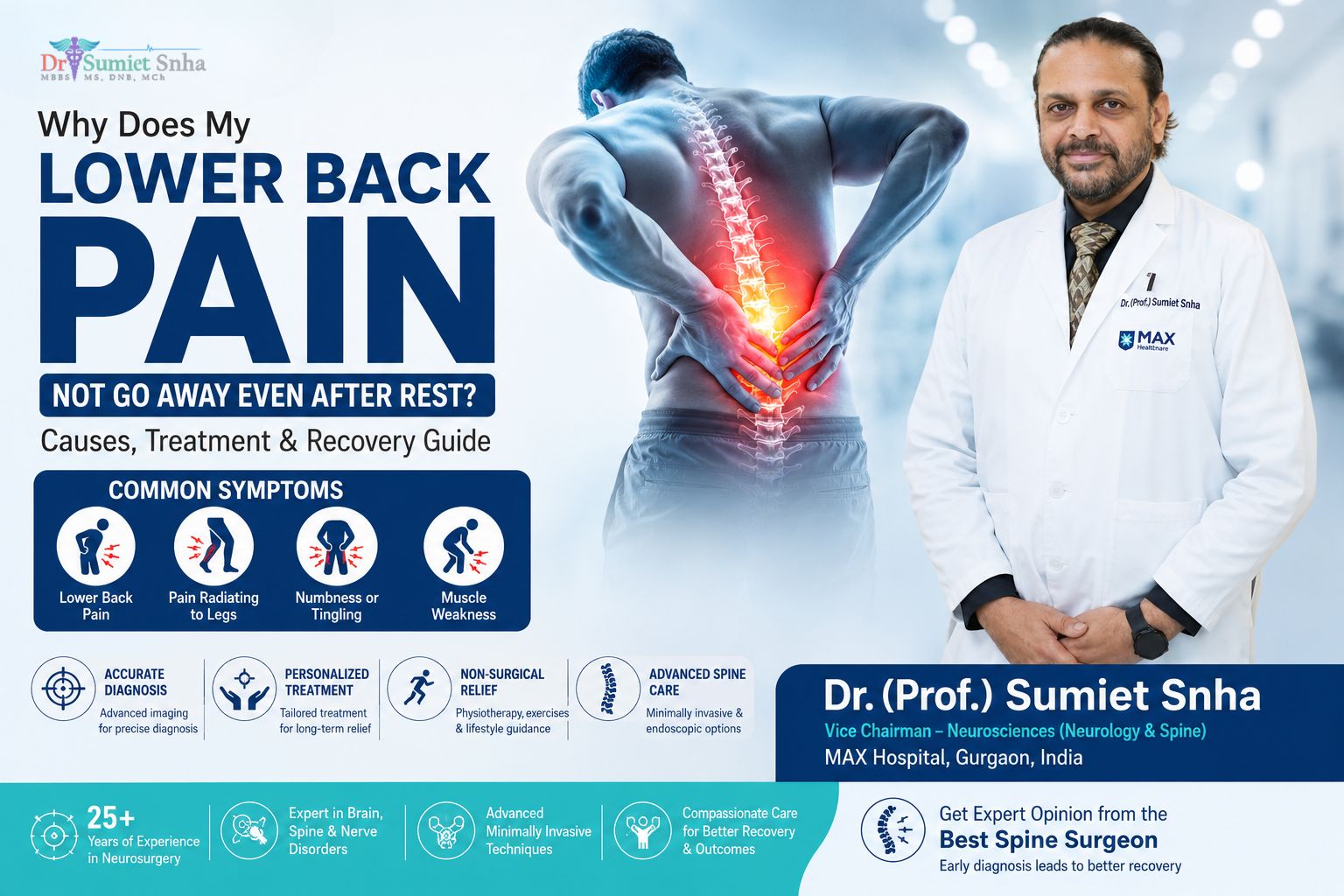
Lower Back Pain Not Going Away: Causes & Treatment Guide
Back discomfort after a long day often settles with proper rest, but lower back pain not going away can be a warning sign of an underlying spinal or nerve-related condition that needs medical attention. While occasional soreness is common, pain that continues for weeks should never be ignored.
Ignoring persistent symptoms may affect mobility, work performance, sleep quality, and overall well-being. This guide explains the most common Lower Back Pain Causes, warning signs, diagnostic methods, effective treatment options, recovery strategies, and preventive measures. It also helps readers understand Chronic Lower Back Pain and when it is appropriate to seek professional evaluation for lasting relief and improved spinal health
Why Is Your Lower Back Pain Not Going Away?
Understanding Persistent Lower Back Pain
Temporary back pain often develops after physical exertion, poor posture, or minor muscle strain and usually improves within a few days with proper care. However, Persistent Lower Back Pain that continues for six to twelve weeks or longer may indicate an underlying spinal condition requiring professional evaluation. Problems involving the muscles, intervertebral discs, facet joints, ligaments, or compressed nerves can all contribute to ongoing discomfort and reduced mobility. Instead of depending only on pain-relieving medications, it is essential to identify the actual source of pain through a comprehensive Lower Back Pain Diagnosis. Early assessment by a qualified Spine Specialist helps determine the most appropriate treatment plan, reduces the risk of long-term complications, and supports a faster, more effective recovery.
Common Causes of Lower Back Pain That Doesn't Improve
Medical Conditions Behind Long-Lasting Pain
Persistent back discomfort often develops because the underlying condition has not been properly identified or treated. While rest may relieve minor soreness, ongoing symptoms usually require a thorough medical evaluation to determine the exact Lower Back Pain Causes. Several spinal, muscular, and lifestyle-related conditions can contribute to long-lasting pain, and accurate diagnosis is essential for choosing the most effective treatment.
Common causes include:
- Muscle strain that hasn't healed due to repeated physical stress or inadequate recovery.
- Herniated Disc, where disc material presses against nearby nerves and causes pain.
- Degenerative Disc Disease resulting from age-related wear and tear of spinal discs.
- Sciatica, causing pain that radiates from the lower back into the leg.
- Spinal Stenosis, a narrowing of the spinal canal that places pressure on nerves.
- Facet Joint Arthritis, leading to stiffness and chronic lower back discomfort.
- Sacroiliac Joint Dysfunction, which causes pain around the lower back and hips.
- Poor posture that places continuous stress on the spine.
- Obesity, increasing pressure on the lower back.
- A sedentary lifestyle that weakens supporting muscles.
- Osteoporosis, making spinal bones more vulnerable to fractures.
- Nerve Compression caused by spinal disorders or damaged discs.
- Kidney-related pain, which is typically felt deeper in the flank and is often accompanied by urinary symptoms rather than movement-related back pain.
- Stress-related muscle tension that causes prolonged tightness and discomfort in the lower back.
Symptoms That Should Never Be Ignored
Not all back pain is a medical emergency, but certain Back Pain Symptoms should never be overlooked, especially when they persist or gradually worsen. While mild discomfort may improve with rest, Chronic Lower Back Pain accompanied by neurological or systemic symptoms can indicate an underlying spinal disorder that requires prompt medical evaluation. Seeking timely care helps identify the cause early and reduces the risk of long-term complications.
Warning signs include:
- Pain lasting several weeks without noticeable improvement.
- Pain radiating to one or both legs.
- Tingling or numbness in the hips, legs, or feet.
- Muscle weakness affecting balance or movement.
- Difficulty walking or reduced coordination.
- Morning stiffness that limits normal activities.
- Pain that worsens while sitting, standing, or changing positions.
- Loss of bladder or bowel control, which requires immediate emergency medical attention.
- Fever accompanied by persistent back pain.
- Unexplained weight loss along with ongoing back discomfort.
How Doctors Diagnose Persistent Lower Back Pain
Persistent back pain should be evaluated systematically to identify its exact cause rather than treating only the symptoms. A comprehensive Lower Back Pain Diagnosis helps determine whether the pain originates from muscles, spinal discs, joints, or nerves. Consulting a qualified Spine Specialist or Spine Surgeon ensures that the most appropriate investigations and treatment plan are selected based on the patient's condition.
|
Diagnostic Method |
Purpose |
|
Medical History |
Reviews the duration of pain, previous injuries, lifestyle, medical conditions, and symptom pattern. |
|
Physical Examination |
Assesses posture, spinal movement, muscle strength, and areas of tenderness. |
|
Neurological Examination |
Evaluates reflexes, sensation, muscle power, and nerve function. |
|
MRI (Magnetic Resonance Imaging) |
Detects herniated discs, nerve compression, spinal stenosis, and soft tissue abnormalities. |
|
CT Scan |
Provides detailed cross-sectional images of bones and complex spinal structures. |
|
X-ray |
Identifies fractures, spinal alignment problems, arthritis, and degenerative changes. |
|
Blood Tests |
Helps rule out infections, inflammatory disorders, or other medical conditions causing back pain. |
|
EMG & Nerve Conduction Study (if required) |
Measures nerve and muscle function when nerve damage or compression is suspected. |
Early and accurate diagnosis allows doctors to begin appropriate treatment before the condition worsens, helping reduce complications, relieve pain more effectively, and improve long-term spinal health.
Treatment Options When Lower Back Pain Is Not Going Away
Persistent back pain does not always require surgery. The most effective Lower Back Pain Treatment depends on the underlying cause, the severity of symptoms, and how long the pain has been present. The primary goal is to relieve pain, restore movement, and prevent future episodes while improving overall spinal health.
Non-Surgical Treatment
Most patients experience significant Lower Back Pain Relief through conservative treatment, which may include:
- Pain medications to manage discomfort.
- Anti-inflammatory medicines to reduce swelling and irritation.
- Physiotherapy to improve flexibility, strength, and mobility.
- Stretching exercises that reduce muscle tightness.
- Lifestyle modification, including regular physical activity.
- Weight management to reduce pressure on the spine.
- Ergonomic improvements at work and home.
- Heat and cold therapy to ease pain and inflammation.
- Core strengthening exercises to support the spine.
- Activity modification to avoid movements that worsen symptoms.
When Surgery May Be Needed
Surgery is considered only when non-surgical treatments fail or when there is significant nerve or spinal damage. A Spine Surgeon may recommend surgery for a Herniated Disc causing nerve damage, severe Sciatica, progressive muscle weakness, spinal instability, persistent symptoms despite conservative treatment, or Cauda Equina Syndrome, which requires emergency intervention. In suitable cases, advanced techniques such as Minimally Invasive Spine Surgery and Endoscopic Spine Surgery can provide effective treatment with smaller incisions, reduced tissue damage, and faster recovery.
Recovery Tips for Long-Term Lower Back Pain Relief
Recovery from persistent back pain requires consistent care and healthy daily habits. Following the recommended treatment plan can improve mobility, reduce discomfort, and support long-term Lower Back Pain Relief. Continue Physiotherapy for Lower Back Pain to restore flexibility, strengthen supporting muscles, and improve spinal function. Take a daily walk to maintain mobility, practice good posture while sitting and standing, and maintain a healthy body weight to reduce stress on the spine. Sleeping on a supportive mattress and performing core-strengthening exercises can enhance spinal stability. Stay physically active, avoid prolonged sitting, follow your doctor's advice carefully, and attend regular follow-up appointments to monitor progress and help prevent future episodes of back pain.
How to Prevent Persistent Lower Back Pain
Preventing long-term back problems begins with adopting healthy lifestyle habits and reducing the risk factors associated with common Lower Back Pain Causes. Regular exercise helps strengthen the muscles that support the spine, while maintaining proper posture during sitting, standing, and lifting protects the back from unnecessary strain. Always lift heavy objects using the correct technique and stretch before physical work or exercise. Maintaining a healthy body weight, consuming adequate calcium and Vitamin D, quitting smoking, and staying hydrated all contribute to better bone and spinal health. Avoid prolonged sitting by taking regular movement breaks, and use ergonomic workstations to support proper spinal alignment. These preventive measures can significantly reduce the risk of Chronic Lower Back Pain and promote long-term spinal wellness.
When Should You See a Spine Specialist?
Persistent or worsening back pain should never be ignored, especially when it interferes with everyday life. You should consult a Spine Specialist if pain lasts longer than six weeks, keeps returning, is accompanied by numbness or tingling, causes weakness in the legs, makes walking difficult, becomes severe at night, develops after an injury, or affects daily activities despite adequate rest. Loss of bladder or bowel control requires immediate emergency medical attention. Seeking timely Lower Back Pain Diagnosis helps identify the underlying cause and allows treatment to begin before complications develop.
Expert Spine Care with Dr. (Prof.) Sumiet Snha
Dr. (Prof.) Sumiet Snha is the Vice Chairman – Neurosciences (Neurology & Spine) and is currently working at MAX Hospital, Gurgaon, India. With more than 25 years of experience in neurosurgery, he has extensive expertise in diagnosing and treating complex brain and spine disorders. Patients experiencing persistent lower back pain or neurological symptoms can benefit from a comprehensive evaluation, personalized treatment planning, and advanced surgical and non-surgical care. If required, consulting the Best Spine Surgeon at the right time can help improve outcomes and support long-term spinal health.
Frequently Asked Questions
1. Why is my lower back pain not going away?
Persistent lower back pain may result from conditions such as a herniated disc, muscle injury, spinal arthritis, nerve compression, or poor posture. If the pain continues despite rest, it is important to seek medical evaluation to identify the underlying cause.
2. Can lower back pain last for months?
Yes. Lower back pain that lasts longer than 12 weeks is generally considered chronic. Without appropriate diagnosis and treatment, symptoms may persist and interfere with daily activities, work, and sleep.
3. What causes chronic lower back pain?
Common causes include degenerative disc disease, herniated discs, sciatica, spinal stenosis, arthritis, muscle weakness, obesity, poor posture, and repetitive strain. A proper medical assessment helps determine the exact cause.
4. When should I worry about persistent lower back pain?
You should seek medical attention if pain lasts more than six weeks, spreads to the legs, causes numbness or weakness, affects walking, worsens at night, or is associated with fever, weight loss, or bladder and bowel problems.
5. Can a Herniated Disc heal without surgery?
In many cases, yes. Mild to moderate herniated discs often improve with medications, physiotherapy, activity modification, and guided exercises. Surgery is considered only when symptoms are severe or conservative treatment fails.
6. What is Sciatica?
Sciatica is pain caused by irritation or compression of the sciatic nerve. It usually begins in the lower back and radiates through the buttock and down one leg, often accompanied by numbness, tingling, or weakness.
7. How is lower back pain diagnosed?
Doctors diagnose lower back pain using a combination of medical history, physical and neurological examinations, and imaging tests such as X-rays, MRI, or CT scans. Blood tests and EMG may be recommended in selected cases.
8. What is the best treatment for persistent lower back pain?
The best treatment depends on the underlying cause. Most patients benefit from medications, physiotherapy, posture correction, exercise, weight management, and lifestyle modifications. Surgery is reserved for specific spinal conditions.
9. Does physiotherapy help lower back pain?
Yes. Physiotherapy helps strengthen the muscles supporting the spine, improves flexibility, reduces pain, restores mobility, and lowers the risk of future back pain episodes when performed consistently.
10. When is spine surgery necessary?
Spine surgery may be recommended for severe nerve compression, progressive muscle weakness, spinal instability, significant herniated discs, cauda equina syndrome, or persistent pain that does not improve with non-surgical treatment.
11. How can I prevent recurring lower back pain?
Regular exercise, maintaining good posture, strengthening core muscles, lifting objects correctly, staying at a healthy weight, avoiding prolonged sitting, and following ergonomic practices can help prevent recurrent back pain.
12. When should I consult a Spine Specialist?
Consult a Spine Specialist if back pain lasts longer than six weeks, keeps recurring, limits daily activities, radiates to the legs, causes numbness or weakness, or does not improve with rest and conservative treatment.
Conclusion
Lower back pain not going away should never be dismissed as a normal part of aging or everyday activity. Persistent pain often has an identifiable underlying cause that requires proper evaluation instead of prolonged rest alone. Early diagnosis allows healthcare professionals to recommend personalized Lower Back Pain Treatment, helping many patients achieve lasting Lower Back Pain Relief through physiotherapy, lifestyle modifications, medications, and other non-surgical approaches. Surgical intervention is considered only for selected cases involving significant spinal or nerve problems. If your symptoms continue, worsen, or begin affecting your daily life, seeking timely advice from the Best Spine Surgeon or a qualified spine specialist can improve outcomes and support long-term spinal health.
.jpg)
.jpg)
.jpg)



Write a Comment