.png)
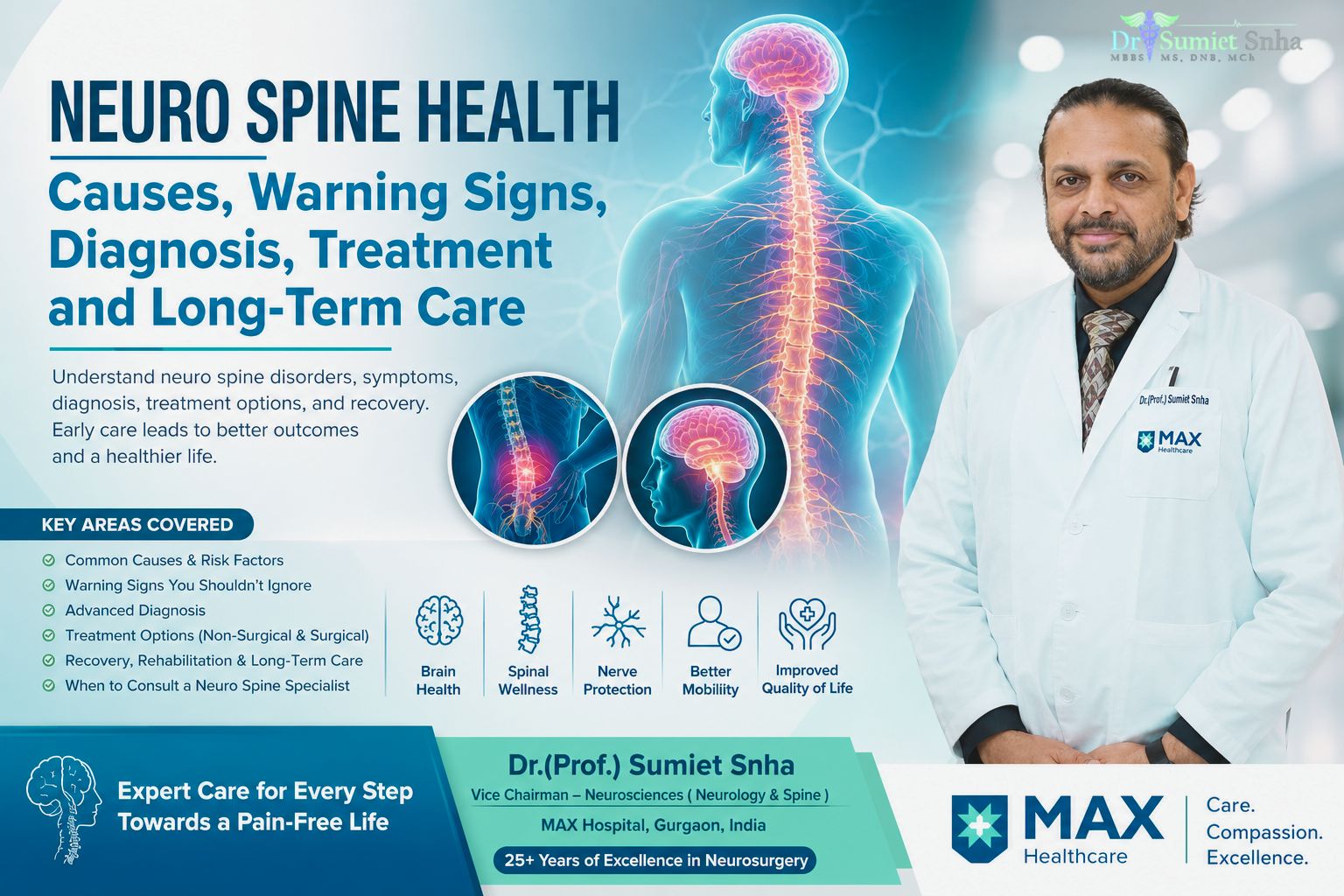
Neuro Spine Health: Causes, Warning Signs, Diagnosis, Treatment and Long-Term Care
Neuro spine health plays a vital role in maintaining normal brain function, spinal stability, and healthy nerve communication throughout the body. Neuro Spine Surgery is an important treatment option for certain brain and spinal conditions when conservative care is no longer effective or when neurological damage is at risk. The brain, spinal cord, and peripheral nerves work together to control movement, sensation, coordination, balance, and essential body functions. When any part of this complex system is affected by injury, degeneration, infection, or disease, it can significantly impact mobility, independence, and overall quality of life.
Many Neuro Spine Disorders develop gradually and may begin with symptoms such as persistent back or neck pain, numbness, tingling, muscle weakness, or difficulty walking. Early medical evaluation is essential because timely diagnosis often allows for more effective treatment and may help prevent permanent nerve damage. Depending on the underlying condition, management may include medication, physiotherapy, lifestyle modifications, or advanced Brain and Spine Surgery techniques. Understanding the causes, warning signs, diagnostic methods, treatment options, and long-term care strategies empowers patients to make informed healthcare decisions and seek appropriate specialist care when needed.
What Is Neuro Spine Health?
Understanding the Neuro Spine System
Neuro spine health refers to the proper functioning of the brain, spinal cord, and peripheral nerves, which together form the body's central communication network. The brain processes information and sends signals through the spinal cord, while peripheral nerves carry these messages to muscles, organs, and other tissues. This continuous exchange of information enables movement, balance, sensation, coordination, and many automatic body functions such as breathing and reflexes.
How Neuro Spine Health Affects Daily Life
When this network is affected by Neuro Spine Disorders, everyday activities like walking, lifting objects, maintaining posture, or even performing simple tasks can become difficult. Conditions involving the brain, spine, or nerves may develop gradually or occur suddenly due to injury, age-related changes, or other medical conditions. Modern Neurosurgery and advanced diagnostic techniques help identify these problems accurately, allowing specialists to recommend the most appropriate treatment. Early recognition and timely management of Spinal Cord Disorders are essential for preserving nerve function, improving mobility, reducing complications, and supporting long-term neurological health.
Common Causes of Neuro Spine Disorders
Medical Conditions That Affect the Brain and Spine
A wide range of medical conditions can affect the brain, spinal cord, and surrounding nerves, leading to pain, weakness, reduced mobility, or other Neurological Disorders. Identifying the underlying cause is essential because treatment varies depending on the condition and its severity. While many patients respond well to conservative therapies, some advanced or progressive conditions may require Neuro Spine Surgery or Brain and Spine Surgery to relieve pressure on nerves, restore function, or prevent further neurological damage. Common causes include:
- Degenerative Disc Disease – Age-related wear of the spinal discs that can cause chronic back or neck pain.
- Herniated Disc – A damaged spinal disc that compresses nearby nerves, resulting in pain, numbness, or weakness.
- Spinal Stenosis – Narrowing of the spinal canal that places pressure on the spinal cord or nerve roots.
- Cervical Spondylosis – Degenerative changes in the neck that may reduce flexibility and compress nerves.
- Brain Tumors – Abnormal growths within the brain that can affect neurological function depending on their size and location.
- Spinal Tumors – Benign or malignant tumors that develop in or around the spine and may interfere with nerve function.
- Trauma and Spinal Injuries – Accidents, falls, or sports injuries that damage the spine, spinal cord, or surrounding tissues.
- Infections – Bacterial, viral, or fungal infections that involve the brain or spine and require prompt medical attention.
- Congenital Abnormalities – Structural conditions present at birth that can affect normal brain or spinal development.
Warning Signs You Should Never Ignore
Certain symptoms involving the brain, spine, or nerves should never be overlooked, especially when they persist, worsen over time, or interfere with daily life. Many Neuro Spine Disorders begin with mild discomfort but can gradually progress if left untreated. Early medical evaluation helps identify the underlying cause and allows timely treatment, reducing the risk of long-term neurological complications. In some cases, advanced conditions may eventually require Spine Surgery to protect nerve function and improve quality of life. Seek medical attention if you experience:
- Persistent back pain that does not improve with rest or conservative treatment.
- Chronic neck pain accompanied by stiffness or reduced range of motion.
- Numbness or tingling in the arms, hands, legs, or feet.
- Muscle weakness affecting grip strength, walking, or daily activities.
- Difficulty walking or maintaining normal balance and coordination.
- Balance problems or frequent unexplained falls.
- Radiating arm or leg pain caused by Nerve Compression or Sciatica.
- Loss of bladder or bowel control, which requires immediate medical evaluation.
- Recurrent headaches associated with neurological symptoms such as vision or speech changes.
- Seizures or sudden weakness that may indicate an urgent neurological condition.
How Neuro Spine Disorders Are Diagnosed
Diagnostic Evaluation
Accurate diagnosis is the foundation of effective treatment for neuro spine conditions. A Neuro Spine Surgeon or Spine Specialist begins with a detailed medical history to understand symptoms, previous illnesses, injuries, and lifestyle factors that may contribute to neurological or spinal problems. This is followed by a comprehensive neurological examination to assess muscle strength, reflexes, sensation, coordination, balance, and nerve function. Depending on the findings, diagnostic tests may include MRI to evaluate soft tissues and the spinal cord, CT Scan and X-rays to examine bones and structural abnormalities, and EMG/Nerve Conduction Studies to assess nerve and muscle function. Blood investigations may also be recommended when infection, inflammation, or other systemic conditions are suspected. Early diagnosis improves treatment outcomes by identifying the exact cause of symptoms and helps determine whether Neuro Spine Surgery, Neurosurgery, or conservative treatment is the most appropriate option for each patient.
Treatment Options for Neuro Spine Disorders
Non-Surgical Treatment
Treatment for neuro spine disorders is tailored to the underlying condition, symptom severity, and overall health of the patient. Many individuals experience significant improvement without surgery through a combination of conservative therapies. These may include medication to reduce pain and inflammation, physiotherapy to improve strength, flexibility, and mobility, and lifestyle modification such as maintaining proper posture, managing body weight, and avoiding activities that place excessive strain on the spine. Pain management techniques, structured rehabilitation, and personalized exercise programs also play an important role in restoring function, relieving symptoms, and improving long-term quality of life.
When Is Neuro Spine Surgery Recommended?
Neuro Spine Surgery may be considered when conservative treatment fails to provide relief or when neurological function continues to decline. Surgery is often recommended for progressive neurological deficits, severe spinal cord compression, brain tumors, spinal tumors, or emergency neurological conditions that require immediate intervention. Depending on the diagnosis, specialists may perform Minimally Invasive Spine Surgery, Endoscopic Spine Surgery, Traditional Spine Surgery, or Brain Surgery to relieve pressure on nerves, stabilize the spine, remove abnormal tissue, and preserve neurological function while supporting faster recovery whenever possible.
Long-Term Care After Neuro Spine Treatment
Successful treatment does not end after recovery from a procedure or completion of therapy. Long-term care is essential for maintaining Neuro Spine Health, improving mobility, and reducing the likelihood of future complications. A consistent recovery plan helps patients regain strength, protect nerve function, and manage conditions such as Chronic Back Pain and Neck Pain more effectively. The following practices support long-term neurological and spinal wellness:
- Attend regular follow-up appointments to monitor healing and identify any concerns early.
- Participate in physiotherapy to improve flexibility, muscle strength, balance, and coordination.
- Maintain a healthy posture while sitting, standing, working, and lifting objects.
- Manage body weight to reduce unnecessary stress on the spine and joints.
- Follow a regular exercise routine that includes stretching, walking, and core-strengthening activities.
- Choose a balanced, nutritious diet rich in calcium, vitamin D, protein, and other essential nutrients to support bone health.
- Practice Neurological Rehabilitation when recommended to restore movement, coordination, and daily function.
- Take preventive measures to reduce recurrence, including avoiding smoking, staying physically active, and following your healthcare provider's advice.
When Should You Consult a Neuro Spine Surgeon?
Consulting a Neuro Spine Surgeon is important if neurological or spinal symptoms persist despite medication, rest, or physiotherapy. Early evaluation can help identify the underlying cause and determine whether conservative treatment is appropriate or if Neuro Spine Surgery should be considered. Seek medical attention if you experience progressive weakness, persistent numbness, walking difficulty, loss of balance, severe neck pain, chronic back pain, or loss of bladder or bowel control, as these symptoms may indicate serious nerve or spinal cord involvement.
If you are seeking expert evaluation, Dr. (Prof.) Sumiet Snha, Vice Chairman – Neurosciences (Neurology & Spine) at MAX Hospital, Gurgaon, India, has more than 25 years of experience in the field of neurosurgery. As an experienced Spine Specialist, he evaluates brain and spine conditions and recommends individualized treatment plans, including both non-surgical management and surgical options when clinically appropriate.
Frequently Asked Questions
1. What is Neuro Spine Surgery?
Neuro Spine Surgery is a specialized surgical procedure used to treat disorders affecting the brain, spinal cord, spinal nerves, and spine when non-surgical treatments are not sufficient.
2. When is Neuro Spine Surgery necessary?
It may be recommended for severe spinal cord compression, brain or spinal tumors, progressive neurological weakness, traumatic injuries, or persistent symptoms that do not improve with conservative treatment.
3. Is Neuro Spine Surgery Safe?
Modern Neuro Spine Surgery is generally considered safe when performed by an experienced specialist. The treatment approach depends on the patient's condition, overall health, and the complexity of the disorder.
4. What conditions affect neuro spine health?
Common conditions include herniated discs, spinal stenosis, cervical spondylosis, degenerative disc disease, brain tumors, spinal tumors, traumatic injuries, infections, and congenital spinal abnormalities.
5. How is a neuro spine disorder diagnosed?
Diagnosis usually involves a detailed medical history, neurological examination, MRI, CT scan, X-rays, EMG or nerve conduction studies, and blood tests when clinically indicated.
6. What are the symptoms of spinal cord compression?
Typical symptoms include persistent back or neck pain, numbness, muscle weakness, difficulty walking, balance problems, and loss of bladder or bowel control in severe cases.
7. What is the recovery time after Neuro Spine Surgery?
Recovery varies depending on the procedure performed, the patient's overall health, and adherence to rehabilitation. Some patients recover within a few weeks, while others may require several months.
8. Can minimally invasive spine surgery reduce recovery time?
Yes. In selected patients, minimally invasive spine surgery may reduce tissue damage, postoperative pain, blood loss, hospital stay, and overall recovery time compared with traditional open surgery.
9. What are the risks of Brain and Spine Surgery?
Potential risks include infection, bleeding, nerve injury, blood clots, cerebrospinal fluid leakage, anesthesia-related complications, and the possibility of requiring additional treatment. Risks vary according to the specific procedure and patient factors.
10. When should I consult a Neuro Spine Surgeon?
You should seek specialist evaluation if you have persistent back or neck pain, progressive weakness, numbness, difficulty walking, balance problems, recurrent neurological symptoms, or loss of bladder or bowel control.
11. Can physiotherapy help avoid surgery?
Yes. Physiotherapy can improve strength, flexibility, posture, and spinal stability. For many patients, it forms an important part of treatment and may reduce the need for surgery when appropriate.
12. How can I maintain long-term neuro spine health?
Maintaining a healthy weight, exercising regularly, practicing good posture, eating a balanced diet, avoiding tobacco, and attending regular medical follow-ups can help support long-term neuro spine health.
Conclusion
Maintaining good neuro spine health is essential for protecting brain function, spinal stability, and overall mobility. Recognizing warning signs early and obtaining a timely diagnosis can lead to more effective treatment and better long-term outcomes. It is important to remember that not every neuro spine condition requires surgery, as many patients benefit from medication, physiotherapy, and lifestyle modifications. When surgery is necessary, advances in Neuro Spine Surgery, including minimally invasive techniques, have improved precision and recovery for many patients. Discussing your symptoms with a qualified specialist ensures a personalized treatment plan based on your specific condition and healthcare needs.
.jpg)
.jpg)
.jpg)



Write a Comment