.png)
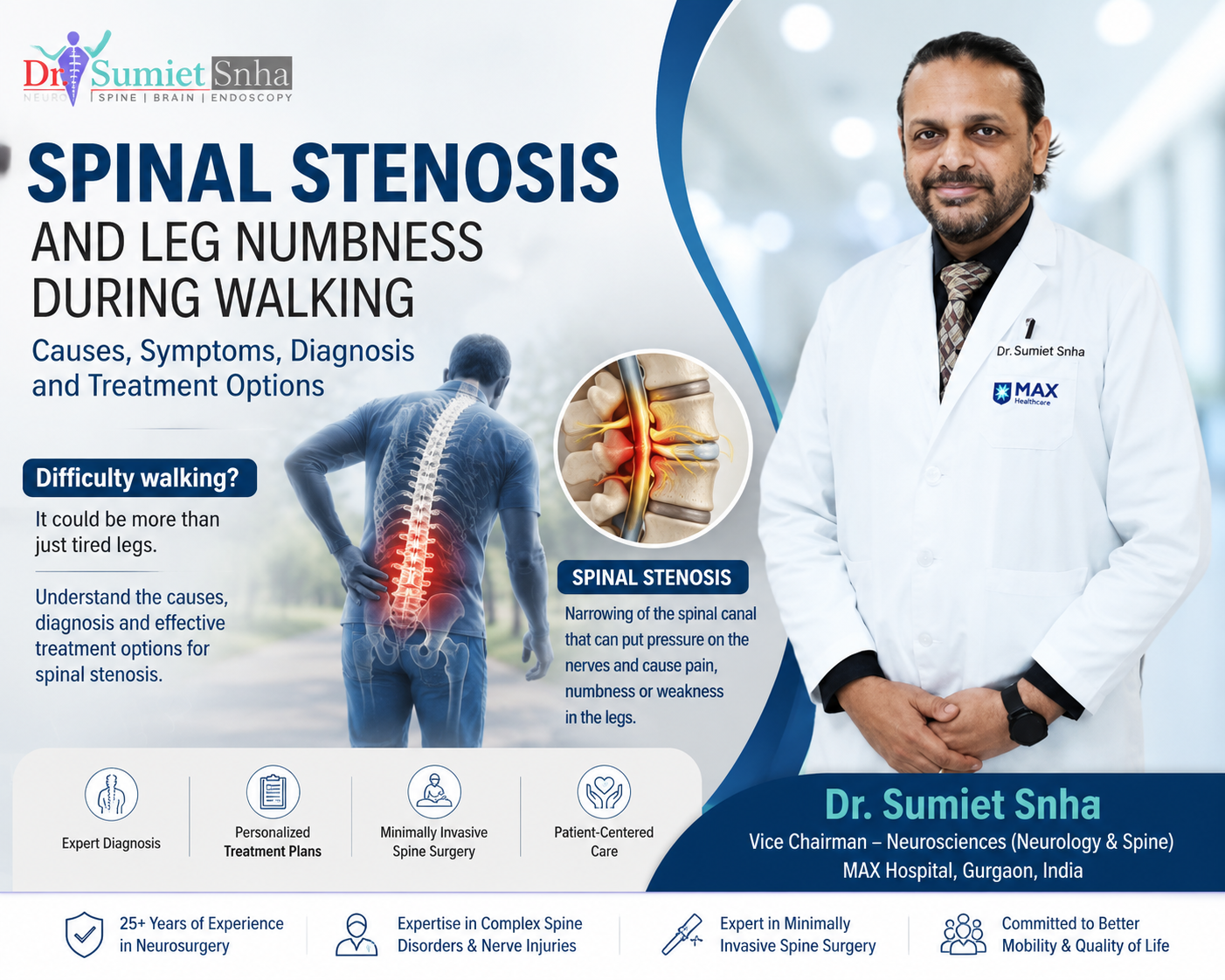
Numbness in Legs While Walking? Spinal Stenosis Symptoms
Numbness in the legs while walking can be uncomfortable, especially when it repeatedly interrupts your daily activities or makes walking difficult. Spinal stenosis symptoms may be one possible reason behind this problem, particularly when numbness, tingling, or leg discomfort develops after standing or walking for some time. While occasional leg numbness can occur due to temporary pressure on a nerve or other causes, recurring symptoms may sometimes indicate an underlying spinal condition.
Spinal stenosis occurs when the spinal canal or spaces around the spinal nerves become narrower, potentially causing nerve compression in the spine. In lumbar spinal stenosis, this pressure may lead to a condition called neurogenic claudication, in which leg pain, heaviness, or numbness becomes more noticeable during walking or standing and may ease with rest or sitting. Early medical evaluation can help determine the actual cause and support timely, appropriate treatment.
What Is Spinal Stenosis?
Understanding Spinal Canal Narrowing
Spinal stenosis is a condition in which the spaces within the spine become narrower than usual, leaving less room for the spinal cord and nerve roots. This narrowing may develop due to age-related changes, arthritis, disc problems, or other structural changes in the spine. Cervical spinal stenosis affects the neck region and may cause symptoms involving the arms, hands, or, in advanced cases, the legs. In contrast, lumbar spinal stenosis develops in the lower back, where compressed nerves can affect the hips, buttocks, and legs.
How Nerve Compression Causes Symptoms
When nerves are compressed, they may produce spinal stenosis symptoms in legs, including numbness, tingling, weakness, heaviness, or pain, particularly during prolonged standing or walking.
Why Do Legs Become Numb While Walking?
Walking and standing can sometimes increase pressure around the nerves in the lower spine. In people with lumbar spinal stenosis, certain spinal positions may reduce the available space for nerve roots, making symptoms more noticeable during movement. This can lead to neurogenic claudication, a common pattern in which leg symptoms develop or worsen after walking or standing for a period of time. Many people find relief when they sit down or lean slightly forward because these positions may reduce pressure on the affected nerves.
Common spinal stenosis symptoms while walking may include:
- Numbness: Reduced sensation in one or both legs.
- Tingling: A pins-and-needles sensation that may travel through the legs.
- Leg pain: Aching, burning, or discomfort that increases with activity.
- Heaviness: Legs may feel tired, weak, or unusually heavy.
- Weakness: Reduced strength that can affect mobility and stability.
- Walking difficulty: Needing to stop frequently, sit, or rest before continuing to walk.
Common Spinal Stenosis Symptoms to Watch For
The pattern and intensity of spinal stenosis symptoms can differ from person to person, depending on the location and severity of nerve compression. Some people may experience mild discomfort, while others may develop symptoms that gradually affect walking, balance, and everyday activities. Common warning signs include:
- Numbness or tingling: A pins-and-needles sensation in one or both legs.
- Leg pain: Discomfort that may become worse after standing or walking.
- Burning or aching: Uncomfortable sensations that may spread through the legs.
- Weakness or heaviness: Legs may feel less powerful, tired, or unusually heavy.
- Walking difficulty: Reduced ability to walk longer distances without resting.
- Relief with sitting: Symptoms may ease when sitting or leaning forward.
- Lower back pain: Aching or stiffness in the lower spine.
- Balance problems: Advanced cases may affect mobility and stability.
These spinal stenosis symptoms in legs can vary in severity and may gradually change over time.
Causes and Risk Factors of Spinal Stenosis
Spinal stenosis can develop when structural changes gradually reduce the available space around the spinal cord or nerve roots. Common causes and risk factors include:
- Age-related degeneration: Wear and tear in the spine can gradually narrow the spinal canal.
- Osteoarthritis and bone spurs: Joint changes may create extra bone growth that presses into nearby spaces.
- Herniated or bulging discs: Disc material can reduce space available for spinal nerves.
- Thickened spinal ligaments: Ligaments may become less flexible and take up more room.
- Spondylolisthesis: One vertebra may shift out of alignment and contribute to narrowing.
- Previous injury or surgery: Structural changes may affect the spinal canal.
- Congenital narrowing: Some people are naturally born with a narrower spinal canal.
Aging is a major risk factor for degenerative lumbar spinal stenosis, although symptoms may develop from several different causes.
How Is Spinal Stenosis Diagnosed?
Medical History and Physical Examination
Diagnosing spinal stenosis begins with a detailed review of symptoms, medical history, and walking limitations. A healthcare professional may check muscle strength, reflexes, sensation, coordination, and balance to identify signs of nerve involvement.
Imaging Tests
Imaging helps examine the spine and detect possible spinal canal narrowing. An X-ray can show bone changes and alignment, while an MRI provides detailed images of discs, nerves, and soft tissues. A CT scan may offer a clearer view of bones and structural changes.
Additional Tests
When needed, electromyography (EMG) and nerve conduction studies can assess nerve function. Together, these evaluations help identify nerve compression in the spine and determine whether it may be contributing to symptoms.
Spinal Stenosis vs Other Causes of Leg Numbness
Leg numbness does not always come from the spine. Several conditions can create similar symptoms, but the underlying causes and treatment approaches may be very different. Comparing the common conditions can help readers understand why an accurate spinal stenosis diagnosis is important.
|
Condition |
Common Symptoms |
Symptoms While Walking |
Typical Cause |
|
Spinal Stenosis |
Leg numbness, tingling, pain, weakness, or heaviness |
Often increases with prolonged standing or walking |
Narrowing of the spinal canal and nerve compression |
|
Sciatica |
Sharp, shooting, or burning pain with tingling |
May become worse with certain movements |
Irritation or compression of a spinal nerve root |
|
Peripheral Neuropathy |
Numbness, burning, tingling, or reduced sensation |
Symptoms may remain persistent |
Nerve damage associated with various underlying conditions |
|
Vascular Claudication |
Leg cramping, aching, or fatigue |
Often triggered by physical activity |
Reduced blood circulation to the legs |
|
Herniated Disc |
Back pain with radiating leg pain, numbness, or tingling |
May worsen with specific activities or positions |
Disc material pressing against a nearby nerve |
Because these conditions can produce overlapping symptoms, self-diagnosis may be difficult. A proper medical evaluation, physical examination, and appropriate imaging or nerve tests can help determine the actual cause and guide suitable treatment.
When Should You See a Doctor for Leg Numbness?
Leg numbness that repeatedly occurs while walking should not be ignored, particularly when it gradually affects mobility or daily activities. Consider seeking medical evaluation if:
- Numbness keeps returning during walking or standing.
- Your walking distance is gradually decreasing.
- Weakness develops in one or both legs.
- Pain or numbness interferes with routine activities.
- Symptoms become more frequent or progressively worse.
- You experience difficulty with balance or mobility.
Seek urgent medical attention if numbness or weakness develops suddenly or progresses rapidly, especially when accompanied by new bowel or bladder problems, severe weakness, or significant changes in sensation.
Spinal Stenosis Treatment Options
The right spinal stenosis treatment depends on factors such as symptom severity, imaging findings, the location of nerve compression, and the patient's overall health. Treatment for lumbar spinal stenosis may begin with non-surgical approaches and progress to surgery when clinically appropriate.
Non-Surgical Treatment
- Physical therapy: Helps improve flexibility, strength, posture, and mobility.
- Activity modification: Adjusting activities that trigger or worsen symptoms.
- Pain-relieving medications: May be recommended when suitable for the individual.
- Exercise programs: Structured exercises can support spinal function and physical conditioning.
- Epidural steroid injections: May provide temporary symptom relief in selected patients.
Surgical Treatment
When symptoms are severe, progressively worsening, or do not respond adequately to conservative care, surgery may be considered. Options can include decompression surgery, laminectomy, spinal fusion when instability is present, and minimally invasive spine surgery for appropriately selected patients.
Can Spinal Stenosis Be Prevented or Managed?
Although age-related changes in the spine cannot always be prevented, healthy habits may support spinal strength, mobility, and everyday function. Helpful steps include:
- Maintaining a healthy body weight
- Staying physically active and strengthening core and back muscles
- Practicing good posture and using safe lifting techniques
- Avoiding prolonged inactivity
- Managing underlying health conditions
- Following a personalized exercise or rehabilitation program recommended by a qualified professional
These measures may help support overall spine health, although they cannot guarantee prevention of spinal stenosis or stop age-related spinal changes.
About the Specialist
Dr. (Prof.) Sumiet Snha, Vice Chairman – Neurosciences (Neurology & Spine), currently practices at MAX Hospital, Gurgaon, India. With more than 25+ years of experience in neurosurgery, his clinical interests include complex spinal disorders, nerve injuries, and minimally invasive spine surgery. His approach to patients with spinal stenosis symptoms involves careful clinical assessment and appropriate diagnostic evaluation to identify conditions such as lumbar spinal stenosis. Based on individual needs, treatment may include conservative care or surgical options. His expertise in spinal stenosis treatment emphasizes appropriate diagnosis, personalized planning, and patient-centered care.
Frequently Asked Questions
1. Can spinal stenosis cause numbness in the legs while walking?
Yes. Lumbar spinal stenosis can compress nerves supplying the legs, causing numbness, tingling, pain, or weakness that may become noticeable during walking.
2. What are the most common spinal stenosis symptoms?
Common symptoms include leg numbness, tingling, pain, heaviness, weakness, lower back discomfort, and difficulty walking or standing for extended periods.
3. Why does walking make spinal stenosis symptoms worse?
Standing and walking may increase pressure on compressed nerves, making symptoms more noticeable. Sitting or leaning forward may provide relief for some people.
4. What is neurogenic claudication?
Neurogenic claudication refers to pain, numbness, weakness, or heaviness in the legs that develops during standing or walking due to nerve compression in the lower spine.
5. Can spinal stenosis be treated without surgery?
In many cases, treatment may begin with physical therapy, exercise, activity modification, medications, or injections when appropriate. The treatment plan depends on individual circumstances.
6. When is surgery recommended for lumbar spinal stenosis?
Surgery may be considered when symptoms are severe, progressively worsening, significantly affecting mobility, or not improving with appropriate non-surgical treatment.
7. Can spinal stenosis cause permanent nerve damage?
Severe or prolonged nerve compression may potentially lead to lasting neurological problems. Early assessment is important when symptoms are persistent or progressively worsening.
8. How is spinal stenosis diagnosed?
Diagnosis may involve a medical history, neurological examination, and imaging such as X-rays, MRI, or CT scans. EMG or nerve conduction studies may be used when clinically indicated.
9. Does spinal stenosis get worse with age?
Age-related changes can increase the likelihood of spinal stenosis, but progression varies between individuals. Some people may have narrowing without significant symptoms.
10. Can exercise help manage spinal stenosis symptoms?
Appropriately selected exercises may improve strength, flexibility, posture, and mobility. A healthcare professional or physical therapist can recommend exercises suited to individual needs.
11. Can spinal stenosis cause difficulty walking?
Yes. Nerve compression may cause leg pain, numbness, weakness, or heaviness that limits walking distance. Some individuals may need to stop and rest before continuing.
12. When should I see a doctor for spinal stenosis symptoms?
Consult a healthcare professional if symptoms persist, repeatedly occur while walking, or interfere with daily activities. Seek urgent medical care for sudden severe weakness or new bowel or bladder problems.
Conclusion
Persistent leg numbness while walking should not always be ignored, particularly when it repeatedly occurs or gradually affects mobility. Spinal stenosis is one possible cause, especially when symptoms become worse with standing or walking and improve after sitting or leaning forward. However, similar symptoms may also result from nerve disorders, circulation problems, or other spinal conditions, making proper diagnosis important. Depending on the underlying cause, severity, and overall health, treatment may range from physical therapy and medication to injections or surgery. If you experience recurring or worsening symptoms, timely medical evaluation can help identify the cause and determine an appropriate care plan.
.jpg)
.jpg)
.jpg)



Write a Comment