.png)
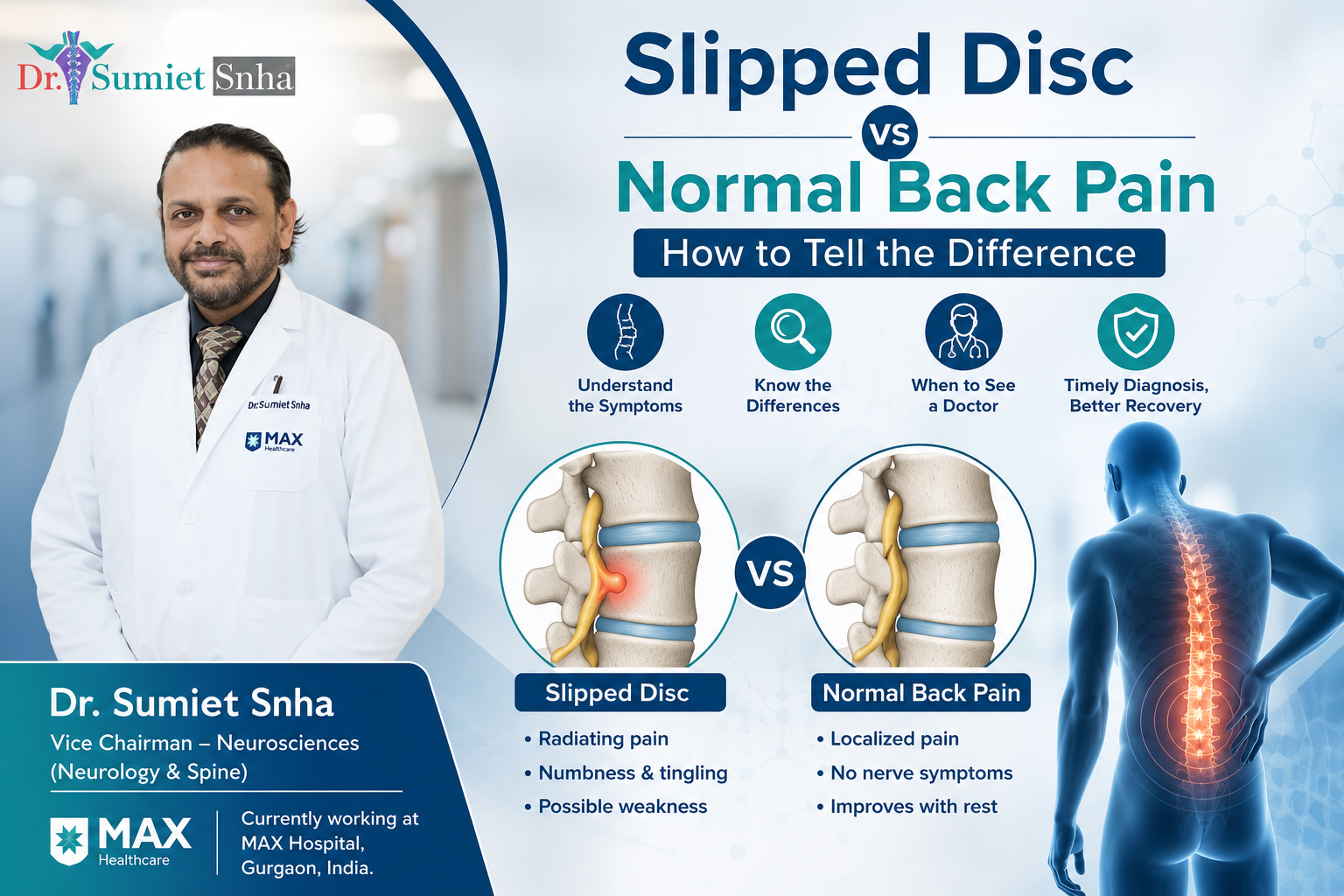
Slipped Disc vs Normal Back Pain: How to Tell the Difference
Back pain is a common concern that can affect people of different ages and activity levels, often resulting from muscle strain, poor posture, or everyday physical stress. Slipped disc symptoms may appear differently, especially when a spinal disc affects a nearby nerve and causes pain that travels beyond the back. While muscular or mechanical back pain is often localized, disc-related problems may involve leg pain, tingling, numbness, or weakness. However, symptoms alone cannot confirm the underlying cause. Understanding these differences can help individuals recognize when persistent or unusual back pain requires timely medical evaluation and appropriate diagnosis.
What Is Normal Back Pain?
Common Causes of Everyday Back Pain
Rather than being a significant spinal ailment, normal back discomfort is frequently associated with daily physical stress. Muscle strains, bad posture, extended sitting, improper lifting of large objects, abrupt movements, or leading a sedentary lifestyle with little exercise can all cause it. These elements may put additional strain on the lower back's supporting systems, joints, and muscles.
Typical Features
This kind of back discomfort frequently gets better over time with enough rest, mild exercise, and adjustments to daily routines. The lower back may be the primary area of discomfort, and there is typically no noticeable numbness, tingling, or paralysis in the legs. A medical evaluation is necessary for persistent or worsening pain.
What Is a Slipped Disc?
A slipped disc is a condition in which one of the soft, flexible discs between the bones of the spine becomes damaged, bulges, or moves out of its normal position. These spinal discs act as cushions between the vertebrae, helping absorb shock and allowing the spine to move smoothly. A herniated disc occurs when the inner disc material pushes through a weakened area of the outer layer and may irritate or compress a nearby nerve. Symptoms can differ depending on the disc's location, the degree of nerve involvement, and the severity of the condition.
Slipped Disc Symptoms vs Normal Back Pain
Understanding the difference between slipped disc symptoms and ordinary back pain can help people recognize when further medical assessment may be needed. Normal back pain is often limited to the lower back and may improve with rest or gentle activity. In contrast, a slipped disc can sometimes affect a nearby spinal nerve, causing discomfort that travels into the buttock or leg along with tingling, numbness, or weakness. However, symptoms can vary considerably between individuals and may overlap with other spinal conditions.
|
Feature |
Normal Back Pain |
Slipped Disc |
|
Main Pain Area |
Often stays around the back |
May extend to the buttock or leg |
|
Nerve Symptoms |
Usually absent |
Tingling, numbness, or weakness may occur |
|
Leg Pain |
Less common |
May occur due to nerve irritation |
|
Movement |
May improve with gentle activity |
Some movements may increase discomfort |
|
Duration |
Often gradually improves |
May persist or return in some cases |
|
Sciatica |
Usually not associated |
May occur when a nerve is affected |
|
Medical Evaluation |
May not always be needed |
Important when neurological symptoms develop |
Important: This comparison is just meant to provide broad information. This table cannot take the place of a professional medical examination or diagnosis, and the existence of certain symptoms does not prove a slipped disc.
How to Recognize Slipped Disc Symptoms
Recognizing common slipped disc symptoms can help individuals understand when back pain may involve irritation or pressure on a spinal nerve. While symptoms differ depending on the disc's location and severity, commonly reported signs may include:
- Persistent or recurring lower back pain.
- Pain that travels from the lower back into the buttock, thigh, or leg.
- Tingling or pins-and-needles sensations in the affected area.
- Numbness affecting the buttock, leg, or foot.
- Muscle weakness that may interfere with everyday movements.
- Difficulty standing or walking comfortably due to pain or weakness.
- Pain that may become worse with coughing, sneezing, or straining in some individuals.
These symptoms require proper medical assessment for an accurate diagnosis.
When Should You See a Doctor?
When back discomfort continues, gets worse, or starts interfering with everyday activities, a medical evaluation is recommended. You ought to think about speaking with a medical expert if you encounter:
- back pain that spreads to the leg
- New numbness, tingling, or unusual sensations.
- Muscle weakness or difficulty walking normally.
- Symptoms that continue despite rest and conservative care.
Seek urgent medical attention if you develop loss of bladder or bowel control, numbness around the groin or saddle area, or rapidly worsening weakness in the legs. These may indicate significant nerve compression requiring prompt evaluation.
How Is the Difference Diagnosed?
Distinguishing a slipped disc from other causes of back pain begins with a detailed medical history and physical examination. A doctor may assess spinal movement, muscle strength, sensation, and reflexes to identify possible nerve involvement. When clinically appropriate, an MRI scan can provide detailed images of the discs and nerves, while an X-ray may help evaluate bones and spinal alignment. Additional tests may be recommended when necessary. Importantly, imaging findings should always be interpreted alongside the person's symptoms and examination results for an accurate diagnosis.
Slipped Disc Treatment vs Normal Back Pain Treatment
The intensity of the symptoms, the underlying reason, and general health all influence treatment. While non-surgical methods are frequently used to repair slipped discs, supportive care and lifestyle modifications may help with simple back discomfort. A customized medical assessment aids in choosing the best course of action.
|
Treatment Approach |
Normal Back Pain |
Slipped Disc |
|
Activity Modification |
Often recommended |
May help reduce strain |
|
Physiotherapy |
Can improve mobility and strength |
Commonly used to support recovery |
|
Stretching & Strengthening |
Often beneficial |
May be advised based on symptoms |
|
Pain Management |
As recommended by a healthcare professional |
Medication may be prescribed when appropriate |
|
Injections |
Not commonly required |
May be considered in selected cases |
|
Surgery |
Rarely needed |
May be considered for persistent symptoms or significant neurological problems |
Surgery is not required for everyone with a slipped disc. Many people improve with appropriate conservative care, while treatment decisions should be based on individual symptoms and medical assessment.
About Dr. Sumiet Snha
Dr. (Prof.) Sumiet Snha is Vice Chairman – Neurosciences (Neurology & Spine) at MAX Hospital, Gurgaon, with 25+ years of experience in neurosurgery. His professional interests include spine and neurological conditions, including minimally invasive spine procedures. His approach emphasizes detailed clinical evaluation, appropriate investigations, and individualized treatment planning based on each patient's condition and needs.
Frequently Asked Questions
1. How can I tell if my back pain is from a slipped disc?
A slipped disc may cause back pain with leg pain, tingling, numbness, or weakness. However, only a clinical evaluation can determine the actual cause.
2. What are the most common slipped disc symptoms?
Common symptoms include lower back pain, radiating leg pain, numbness, tingling, and muscle weakness when a nearby nerve is affected.
3. Can normal back pain cause leg pain?
Yes, some non-disc-related conditions can cause pain that spreads to the leg. Persistent or severe radiating pain should be medically evaluated.
4. Does a slipped disc always require surgery?
No. Many people improve with conservative treatment. Surgery is generally considered only in selected cases with persistent symptoms or significant nerve-related problems.
5. Can a slipped disc heal without surgery?
Yes, many slipped discs can improve over time with appropriate non-surgical care, physical therapy, activity modification, and prescribed medication when necessary.
6. How is a slipped disc diagnosed?
Diagnosis usually involves medical history, physical and neurological examinations, and sometimes imaging tests such as MRI or X-ray.
7. When should I see a spine specialist for back pain?
Consider specialist evaluation if pain persists, worsens, radiates into the leg, or is accompanied by numbness, tingling, weakness, or difficulty walking.
8. Can poor posture cause a slipped disc?
Poor posture may increase stress on the spine and contribute to back problems, but it does not necessarily cause a slipped disc on its own.
9. Is leg pain always a sign of a slipped disc?
No. Leg pain can have several causes, including nerve irritation, muscle problems, joint conditions, and other spinal disorders.
10. Can coughing or sneezing worsen slipped disc pain?
In some people, coughing, sneezing, or straining may temporarily increase pain because of pressure changes around an irritated spinal nerve.
11. How long does a slipped disc take to improve?
Recovery varies depending on the disc problem and individual health. Many cases improve with conservative care, while some may require further treatment.
12. When is back pain an emergency?
Seek urgent medical attention for back pain accompanied by loss of bladder or bowel control, numbness around the saddle area, or rapidly worsening leg weakness.
Conclusion
Understanding the difference between ordinary back pain and disc-related symptoms can help you recognize when further evaluation may be necessary. Pain that radiates into the leg, along with numbness, tingling, or weakness, may indicate nerve involvement. If symptoms persist, worsen, or affect daily activities, seek appropriate medical assessment. Timely diagnosis and personalized treatment can support safer management and better recovery outcomes.
.jpg)
.jpg)
.jpg)



Write a Comment