.png)
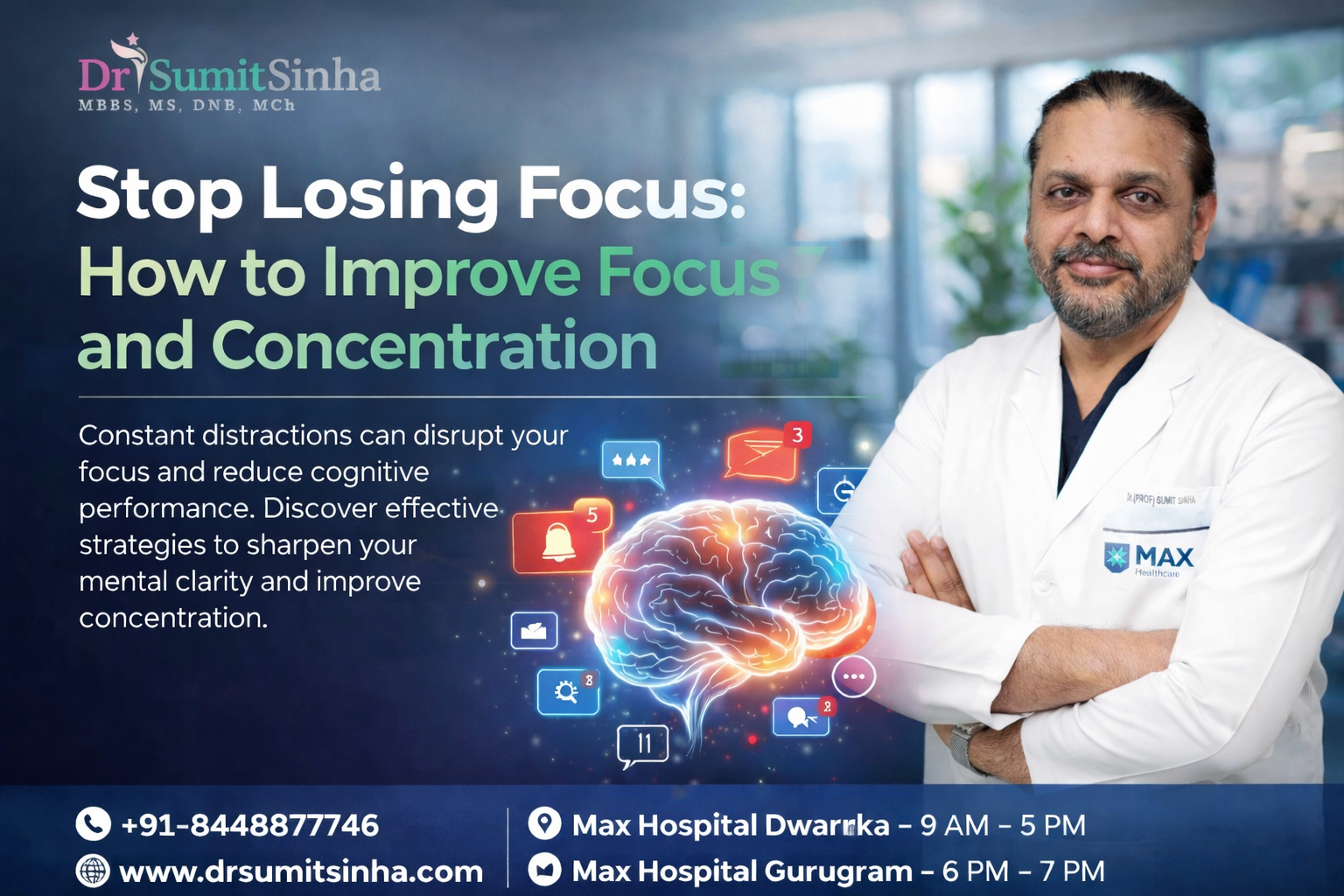
Stop Losing Focus: How to improve focus and concentration
Your phone just buzzed. Again. That familiar ping pulls your attention away from work, and before you know it, you've lost your train of thought completely. Sound familiar? You're not alone. If you are searching for how to improve focus and concentration, you are in the right place. The constant barrage of notifications affects brain function in ways most people don't realize. Every alert, every beep, every vibration is slowly chipping away at your ability to concentrate, remember, and think clearly. And the worst part? We've become so used to it that we don't even notice the damage anymore.
Let's talk about what's really happening inside your head — and more importantly, what you can do about it.
The Invisible Brain: What's Really Happening When You Check Your Phone
Every time your phone lights up with a notification, your brain doesn't just glance at it and move on. What actually happens is far more destructive. Your prefrontal cortex — the part responsible for decision-making and focus — gets hijacked. It takes an average of 23 minutes to fully regain your concentration after a single interruption. Think about how many notifications you get in a day. Now multiply that by 23 minutes. That's hours of productive brain power vanishing into thin air, and you didn't even realize it was happening.
Dr. Sumiet snha, a renowned neurosurgeon with over 25 years of experience and 10,000+ brain surgeries at Max Hospital Dwarka, explains it simply: "The human brain wasn't designed for this level of constant stimulation. When we expose ourselves to endless notifications, we're essentially training our brains to be distracted."
Why You Can't Remember What You Read Five Minutes Ago
Ever finish reading an article and immediately forget what it said? That's not your fault — it's your notification-riddled brain struggling to form memories. When your attention keeps getting pulled in different directions, your hippocampus (the brain's memory center) can't properly encode information. You're not actually learning or retaining anything; you're just skimming the surface of everything. This constant state of partial attention creates what researchers call "cognitive residue" — parts of your previous task stick in your mind and contaminate your next one.
The science is clear: multitasking is a myth. Your brain can't truly focus on multiple things simultaneously. What it does instead is rapidly switch between tasks, and every switch comes with a cost. That cost shows up as forgotten details, missed deadlines, and that frustrating feeling that you're always busy but never actually getting anything done.
Stop Losing Focus by Taking Control
Here's the truth nobody wants to hear: you need to turn off notifications. Not just silence them — actually turn them off. Most notifications are not urgent. That email can wait. That, like in your post, doesn't need an immediate response. The world will not end if you don't check your phone for an hour. Start by identifying which apps truly need to alert you (spoiler: it's probably just calls and texts from specific people) and ruthlessly disable everything else.
Create what I call "notification-free zones" in your day. Pick specific blocks of time — maybe 9 AM to 11 AM — where your phone goes on Do Not Disturb mode. Use these windows for your most important work. Your brain will thank you with sharper thinking, better memory, and actual productivity. You'll be amazed at how much you can accomplish when you're not being interrupted every three minutes.
The 90-Minute Rule: Working With Your Brain, Not Against It
Understanding Your Brain's Natural Rhythms
Your brain operates in natural cycles called ultradian rhythms — roughly 90-minute periods of high alertness followed by a need for rest. When you work in focused 90-minute blocks without any interruptions, you tap into your brain's optimal performance state. This is when your biology stops being your enemy and starts being your greatest tool.
How to Apply the 90-Minute Focus Block
Here's how to apply it: Set a timer for 90 minutes. Put your phone in another room. Close all unnecessary browser tabs. Tell your colleagues you're unavailable. Then work on one single task. After 90 minutes, take a real break — walk around, get water, let your mind wander. This pattern allows your brain to consolidate what you've learned and reset for the next session.
The Dopamine Trap: Why Notifications Feel So Good
The Chemical Reward System
Let's talk about why this is so hard to stop. Every notification triggers a small dopamine release in your brain — the same neurotransmitter involved in addiction. Your brain literally gets a chemical reward for checking your phone. Over time, you become conditioned to crave that hit. You start checking your phone even when it hasn't buzzed, just in case there's something new waiting for you.
Breaking the Vicious Cycle
This creates a vicious cycle: notifications reduce your ability to focus, which makes you feel less accomplished, which makes you seek more notifications for that dopamine boost, which further destroys your focus. Breaking this cycle requires conscious effort. You need to replace the notification-checking habit with something healthier — maybe a quick stretch, a few deep breaths, or looking out the window for 30 seconds.
Deep Work vs. Shallow Work: The Quality Gap
Not all work is created equal. There's deep work — cognitively demanding tasks that create real value and require sustained focus — and shallow work — logistical tasks that don't need much mental horsepower. Notifications push you into a constant state of shallow work. You're always responding, always reacting, never actually creating or thinking deeply about complex problems.
Cal Newport, who popularized the term "deep work," found that professionals who can consistently engage in focused, uninterrupted work become exponentially more valuable in their fields.The secret? They've eliminated the notification culture from their work environment. They've learned to protect their attention like it's their most valuable asset — because it is.
What Brain Science Says About Attention Restoration
Attention Restoration Theory Explained
Your attention is not an unlimited resource. It depletes throughout the day, especially when you're constantly switching tasks and responding to notifications. Neuroscientist Dr. Sumiet snha notes that "the brain needs periods of rest and low stimulation to restore its capacity for focused attention." This is called Attention Restoration Theory.
Practical Ways to Restore Your Attention
Nature walks are particularly effective — just 20 minutes in a natural environment can significantly boost your ability to concentrate afterward. No podcasts, no phone, just walking and observing. Other effective restoration activities include meditation, light exercise, or engaging in a creative hobby that doesn't involve screens. The key is giving your prefrontal cortex a break from decision-making and allowing your default mode network to activate.
The 24/7 Availability Myth: Setting Boundaries That Stick
One of the biggest lies of modern work culture is that you need to be available all the time. You don't. Being constantly available doesn't make you more productive; it makes you more scattered. Great work happens when you can think deeply, not when you're responding to every ping within seconds.
Start by setting clear boundaries with colleagues and clients. Let them know you check email at specific times — say, 10 AM, 2 PM, and 4 PM — rather than constantly throughout the day. Most people will respect this once they see that your response quality improves. For truly urgent matters, they can call. Everything else can wait a few hours. This simple change can dramatically sharpen your thinking and your daily work life.
Your Phone's Dark Patterns: How Apps Are Designed to Hook You
The Psychology Behind Addictive Design
Tech companies employ teams of psychologists to make their apps as addictive as possible. Those red notification badges? Designed to create anxiety until you clear them. The pull-to-refresh gesture? Modeled after slot machines. Infinite scroll? Eliminates natural stopping points so you keep consuming. Understanding these manipulations is the first step to outsmarting them.
Fighting Back With Smart Settings
Fight back by changing your phone settings. Turn off badge notifications for everything. Switch your phone to grayscale mode — colors trigger dopamine. Remove social media apps from your home screen so you have to actively search for them. Make your phone boring and utilitarian again. These small friction points give your conscious mind a chance to intervene before your habit loops take over.
The Morning Routine That Protects Your Brain All Day
How you start your day sets the tone for your brain's performance. If the first thing you do is check notifications, you're immediately putting yourself in reactive mode. Your brain shifts into "respond to external stimuli" mode instead of "create and think strategically" mode. This pattern persists throughout the day.
Instead, protect the first hour after waking. Don't touch your phone for at least 60 minutes. Use that time for activities that support cognitive function: light exercise, a healthy breakfast, meditation, journaling, or planning your day. Give your prefrontal cortex time to fully wake up and engage before you bombard it with other people's agendas. This single change can transform your mental sharpness throughout the entire day.
The Social Cost: When Notifications Replace Real Connection
The Presence Problem
Here's an irony: the devices meant to connect us are actually making us less present with the people we care about. When you're with friends or family but constantly checking your phone, you're not actually there. Your attention is fragmented. Research shows that even having a phone visible on the table during a conversation reduces the quality of that interaction.
Rebuilding Real Connections
Put your phone away during meals and conversations. Not just face-down — put it in another room or in your bag. Watch what happens. Conversations become deeper. You remember more details. You feel more connected. Your relationships improve. And bonus: your brain gets a break from the notification onslaught, which helps restore your capacity for sustained attention when you return to work.
Memory Formation Requires Focus: The Science You Need to Know
Here's something Dr. Sumiet snha emphasizes with patients: memory formation requires attention during encoding. If you're distracted when you're trying to learn something, your brain can't properly encode that information into long-term memory. It's not about having a "bad memory" — it's about never giving your brain the focused attention needed to create strong memories in the first place.
This is why you can't remember names at parties when your phone keeps buzzing. Why do you forget what you read? Why can't you recall what happened in that meeting? Your attention was split, so your memory never had a chance. The solution? Practice single-tasking. When you're learning something important, eliminate all distractions. Your future self will thank you when you can actually recall the information when you need it.
The 30-Day Notification Detox
Week-by-Week Breakdown
Ready to take back your brain? Try this 30-day challenge:
Week 1: Turn off all non-essential notifications. Only allow calls and texts from favorite contacts.
Week 2: Implement 90-minute focus blocks with your phone in another room.
Week 3: No phone for the first hour after waking and the last hour before bed.
Week 4: Delete social media apps from your phone entirely (you can still access them on your computer during designated times).
What to Expect During Your Detox
Track how you feel each week. Most people report dramatic improvements in their ability to concentrate, remember information, and complete complex tasks. You might experience some anxiety at first — that's normal. Your brain is going through withdrawal from constant dopamine hits. Push through. By week three, you'll likely feel more in control of your attention than you have in years.
The Workplace Culture Problem: Changing Systems, Not Just Yourself
Individual changes are important, but if your workplace culture demands constant availability, you're fighting an uphill battle. Have conversations with your team about "focus hours" where everyone minimizes interruptions. Use status indicators to show when you're in deep work mode. Normalize not responding immediately to every message.
Leaders especially need to model this behavior. If managers send emails at midnight, employees feel pressure to be available 24/7. If teams celebrate "always-on" culture, people sacrifice their cognitive health. Create systems that reward deep work and meaningful progress, not just rapid response times.
The Long-Term Brain Impact: Why This Matters More Than You Think
How Neuroplasticity Works Against You
Constant distraction isn't just annoying — it's potentially changing your brain structure. Neuroplasticity means your brain physically adapts to how you use it. If you spend years training your brain to be distracted, you're literally rewiring neural pathways to default to scattered attention. Some research suggests this may increase anxiety, reduce working memory capacity, and even impact your ability to empathize — because empathy requires sustained attention to understand others.
The Good News: You Can Retrain Your Brain
The good news? Neuroplasticity works both ways. You can retrain your brain for focus. It takes time — usually several months of consistent practice — but it's possible. Think of it like building muscle. Every time you resist checking a notification and maintain focus, you're strengthening the neural pathways associated with sustained attention. It's less about tricks and more about consistent daily practice over time.
Your New Relationship With Technology: Intentional, Not Reactive
The goal isn't to abandon technology — it's to use it intentionally. Your phone should serve you.Before you pick up your device, ask yourself: "What am I trying to accomplish right now?" If you can't answer clearly, put it down. Check notifications during specific times you've scheduled, not randomly throughout the day.
Treat your attention like your most valuable currency, because it is. Every notification you respond to is a withdrawal from your cognitive bank account. Make sure the transaction is worth it. Most of the time, it's not. By protecting your attention, you're protecting your ability to think clearly, remember accurately, and do meaningful work that actually matters.
Final Thoughts: Reclaiming Your Brain Power Starts Now
You can't stop losing focus if you don't first stop the notifications. It's that simple and that hard. The technology designed to keep you "connected" is actually disconnecting you from your own cognitive potential. Every ping, buzz, and alert is a tiny theft of your mental resources. Multiply that by dozens or hundreds of times per day, and you can see why staying sharp feels impossible.
Start small. Pick one strategy from this article and implement it today. Maybe it's turning off notifications for just three apps. Maybe it's one 90-minute focus block tomorrow morning. Maybe it's leaving your phone in another room during dinner tonight. One change leads to another, and before you know it, you've rebuilt your capacity for sustained attention.
Your brain is capable of incredible focus, deep thought, and powerful memory — but only if you give it the environment it needs to thrive. Stop feeding it constant distractions. Start feeding it the sustained attention it's craving. The difference in your work quality, creativity, and mental clarity will be remarkable.
As Dr. Sumiet snha reminds his patients: "The brain is remarkably resilient, but it needs you to create the conditions for it to function optimally." Those conditions don't include constant notifications. They include focus, rest, and intentional use of your attention.
Your brain power isn't ruined — it's just buried under notifications. Time to dig it out.
.jpg)
.jpg)
.jpg)



Write a Comment